
How to Search Grant County Court Records
Two official paths cover almost every Grant County District Court case. The first is the Oklahoma State Courts Network, known as OSCN. The second is On Demand Court Records, known as ODCR. The Grant County Court Clerk links ODCR and calls it a free site with extensive case information. Both let you search by name or by case number at no cost, and both list Grant County in their court menus.
Have a few details ready before you start. A full name helps, and a case number helps more. A date of birth or a filing year can trim a long list of matches down to one person.
- Open the OSCN Docket Search and set the County or Court field to Grant County District Court.
- Search by case number when you know it. This is the cleanest route to a filed case.
- If you lack a number, enter a last name, then add a first name or birth date range to cut down false hits.
- Limit by case type when the record kind is known, such as felony, misdemeanor, traffic, family, or probate.
- Open the docket and read the entries, then run the same name through ODCR as a second check.
The county landing page ties these office links together for residents and researchers alike, as shown on the Grant County official site.
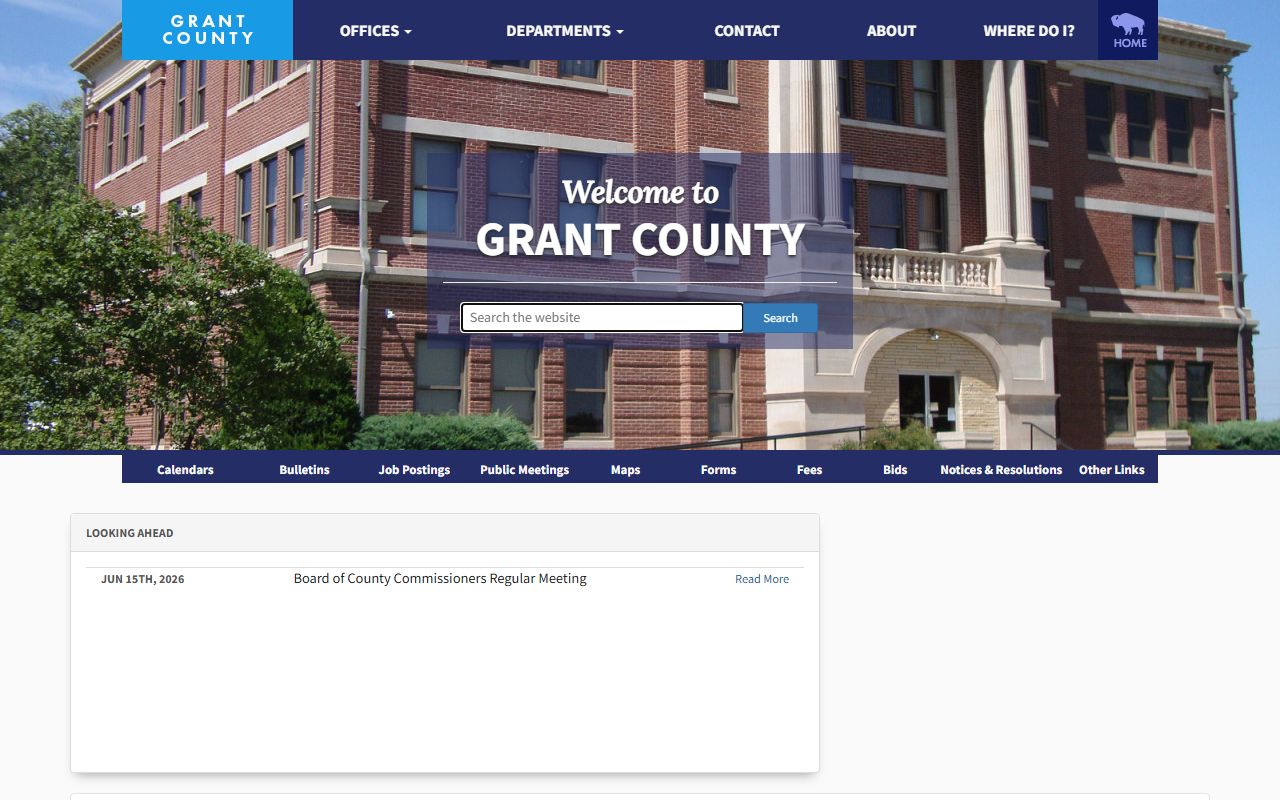
That page routes visitors to the Court Clerk, the County Clerk, and the docket search tools used for Grant County court records every day.
The Grant County Judicial System
Oklahoma runs a unified District Court system. The Grant County District Court is the trial court of general jurisdiction, so one court hears civil suits, felony and misdemeanor prosecutions, family cases, probate, small claims, traffic, and protective orders. Above it sit the appellate courts. Below it, the Medford Municipal Court handles city ordinance and city traffic matters on a limited schedule.
Two judges serve the county. Associate District Judge Hon. Jeff Crites sits locally in Room 201 of the courthouse. District Judge Hon. Paul K. Woodward covers the district from an office in Enid. Civil appeals run to the Oklahoma Supreme Court, with many sent to the Court of Civil Appeals, while criminal appeals go to the Oklahoma Court of Criminal Appeals.
Case flow: Municipal Court › District Court › Court of Civil Appeals › Oklahoma Supreme Court. Criminal appeals follow a separate track to the Oklahoma Court of Criminal Appeals.
| Court | Jurisdiction | Case Types |
|---|---|---|
| Oklahoma Supreme Court | Highest civil court | Civil appeals, court oversight |
| Court of Criminal Appeals | Highest criminal court | Criminal appeals |
| Court of Civil Appeals | Intermediate appellate | Assigned civil appeals |
| Grant County District Court | General trial court | Civil, criminal, family, probate, traffic, small claims |
| Medford Municipal Court | City court | City ordinance, city traffic |
The District Court and the Medford Municipal Court do not overlap. A state or county citation lands in District Court, while a city ticket stays with the municipal court. The split decides where you search, so the comparison below is worth a close look.
| Feature | District Court | Medford Municipal Court |
|---|---|---|
| Handles | Felony, misdemeanor, civil, family, probate, state and county traffic | City ordinance and city traffic |
| Records office | Court Clerk, Room 202 | City Hall |
| Online search | OSCN and ODCR | None published |
| Schedule | Regular business days | 2nd Friday of odd months, 3 p.m. |
| Phone | 580-395-2828 | 580-395-2823 |
The same docket search tool also exposes the appellate court menu, which makes the hierarchy easy to see at a glance through the OSCN docket search form.
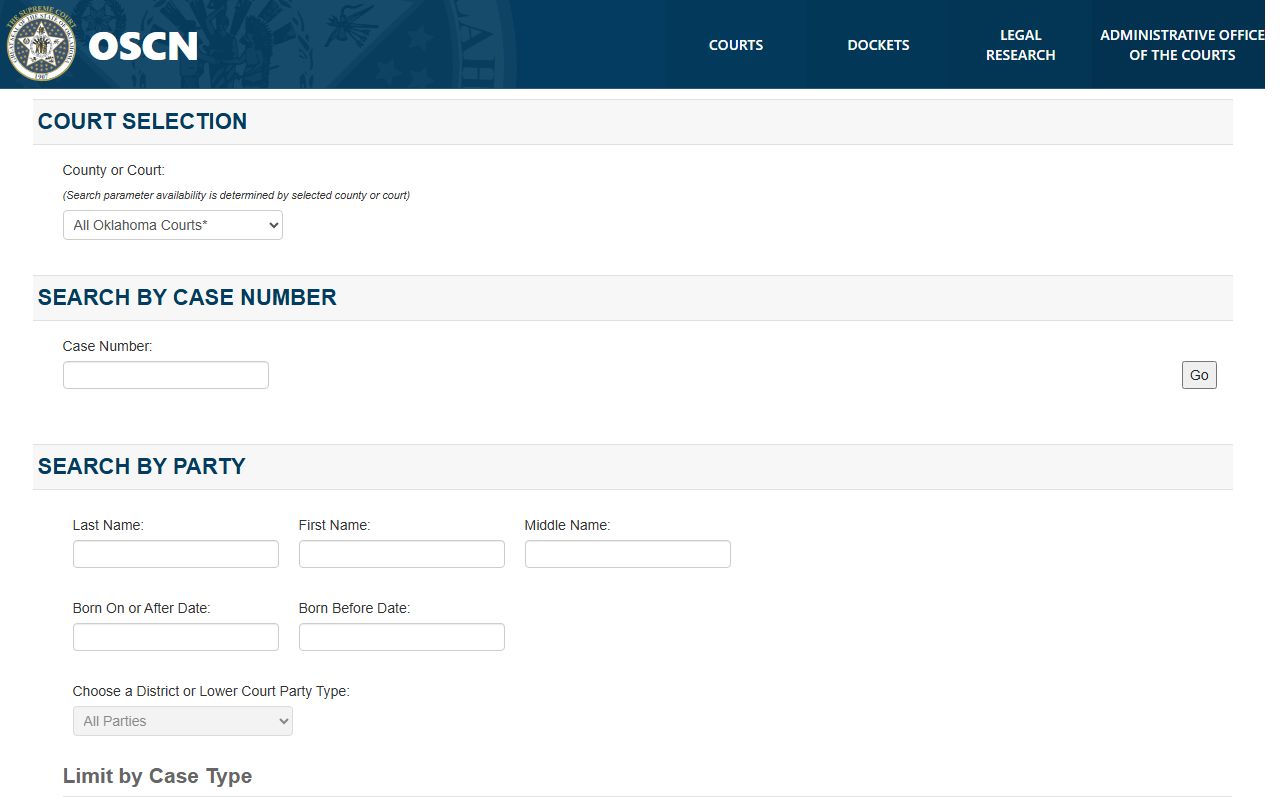
From one screen you can target Grant County District Court or step up to a statewide appellate search.
Grant County Courthouse in Medford
The Grant County Court House stands at 112 E Guthrie St in Medford. The three-story brick building dates to 1909 and houses the District Court offices, the Court Clerk, the County Clerk, the District Attorney, and other county offices. The Sheriff's Office sits directly east on First Street. Most offices keep the same business hours, which helps when you plan an in-person visit.
Court Clerk Office
Adrienne Hembree, Room 202
Medford, OK 73759
580-395-2828
8:00 a.m. to 4:00 p.m. Mon-Fri
County Clerk Office
Rachelle D. McCaleb, Room 102
Medford, OK 73759
580-395-2274
8:00 a.m. to 4:00 p.m. Mon-Fri
The county contact directory lists every office by room number, phone, and hours, which saves a wasted trip up the wrong stairwell. You can confirm details on the Grant County contact directory before you go.
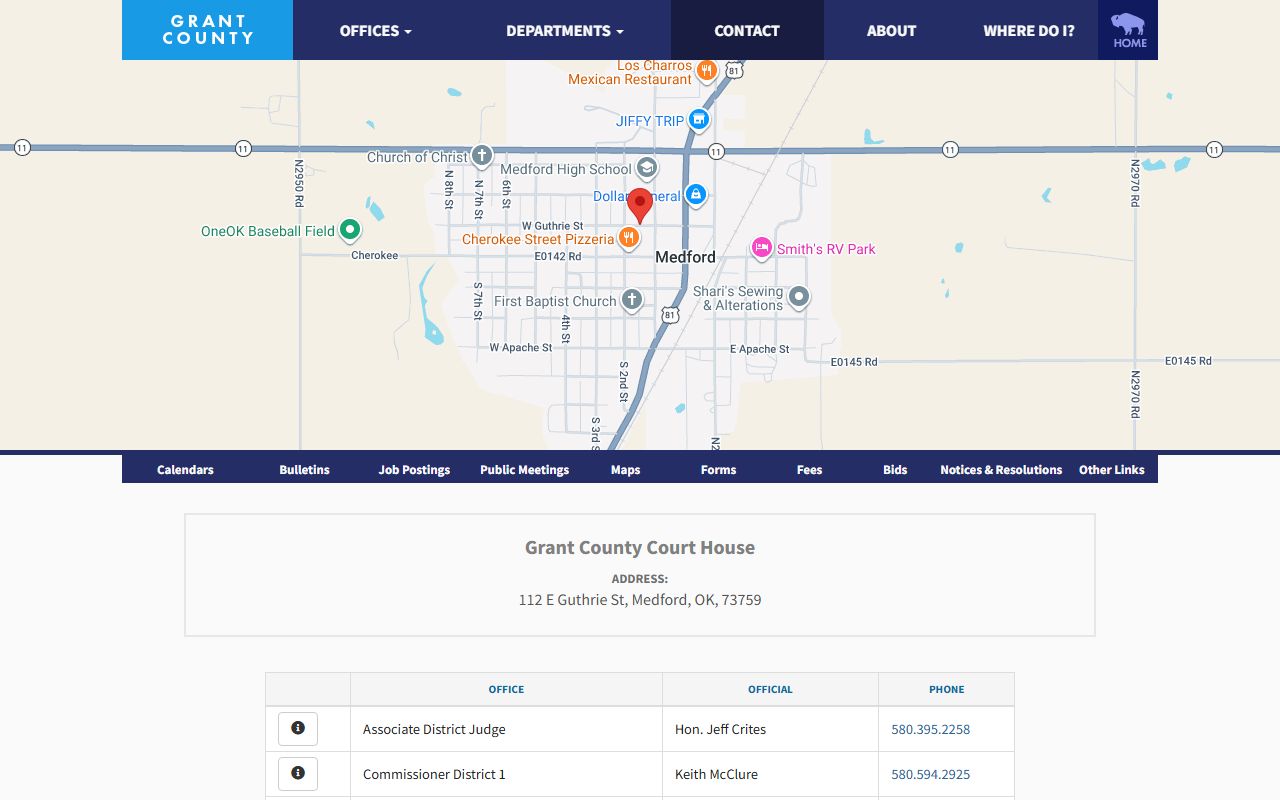
That directory is the quickest way to match a Grant County office with the right room and the right phone line.
The courthouse is also a landmark. The Oklahoma State Historic Preservation Office records the building as a 1909 brick structure with limestone accents, original wood windows, and terra cotta roof tiles. You can view the listing on the SHPO National Register record for the courthouse.
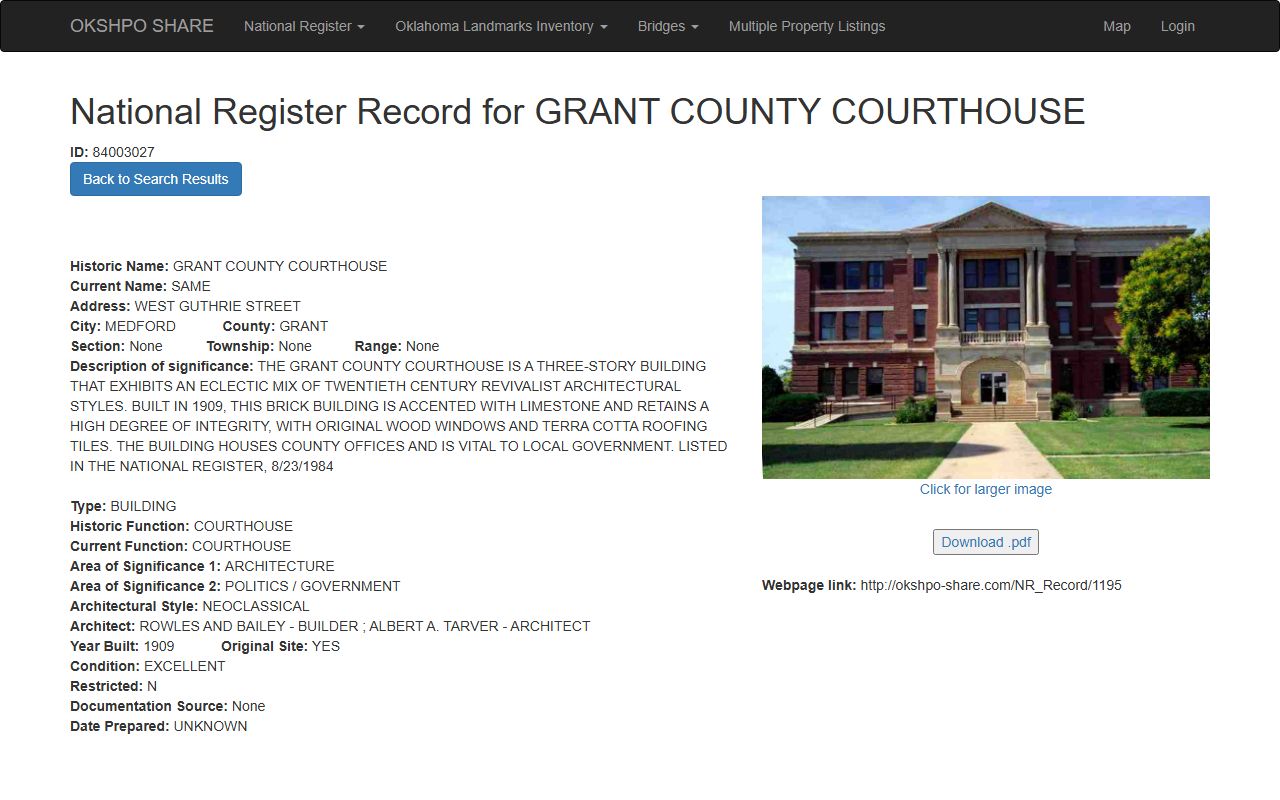
It was added to the National Register of Historic Places on August 23, 1984, under reference NR 84003027.
Grant County Court Clerk and County Clerk
Grant County splits its clerk duties between two offices. The Court Clerk keeps court case files. The County Clerk keeps land and county records. The line matters, because it tells you which counter to call. Marriage licenses, divorce cases, criminal files, probate filings, civil suits, and traffic citations filed in District Court all point to the Court Clerk. Deeds, mortgages, liens, plats, and oil and gas leases point to the County Clerk.
Court Clerk Adrienne Hembree works from Room 202 and can be reached by phone, mail, email, or in person. The office holds court files and documents that begin in the early 1900s. The Court Clerk page also states the public rule plainly: all court records are open for inspection except juvenile, mental health, and adoption records.
County Clerk Rachelle D. McCaleb works from Room 102 and serves as the principal record keeper of the county. That office also processes open-records requests for county documents and keeps the county forms library. The full office list, with names and room numbers, appears on the Grant County offices index.
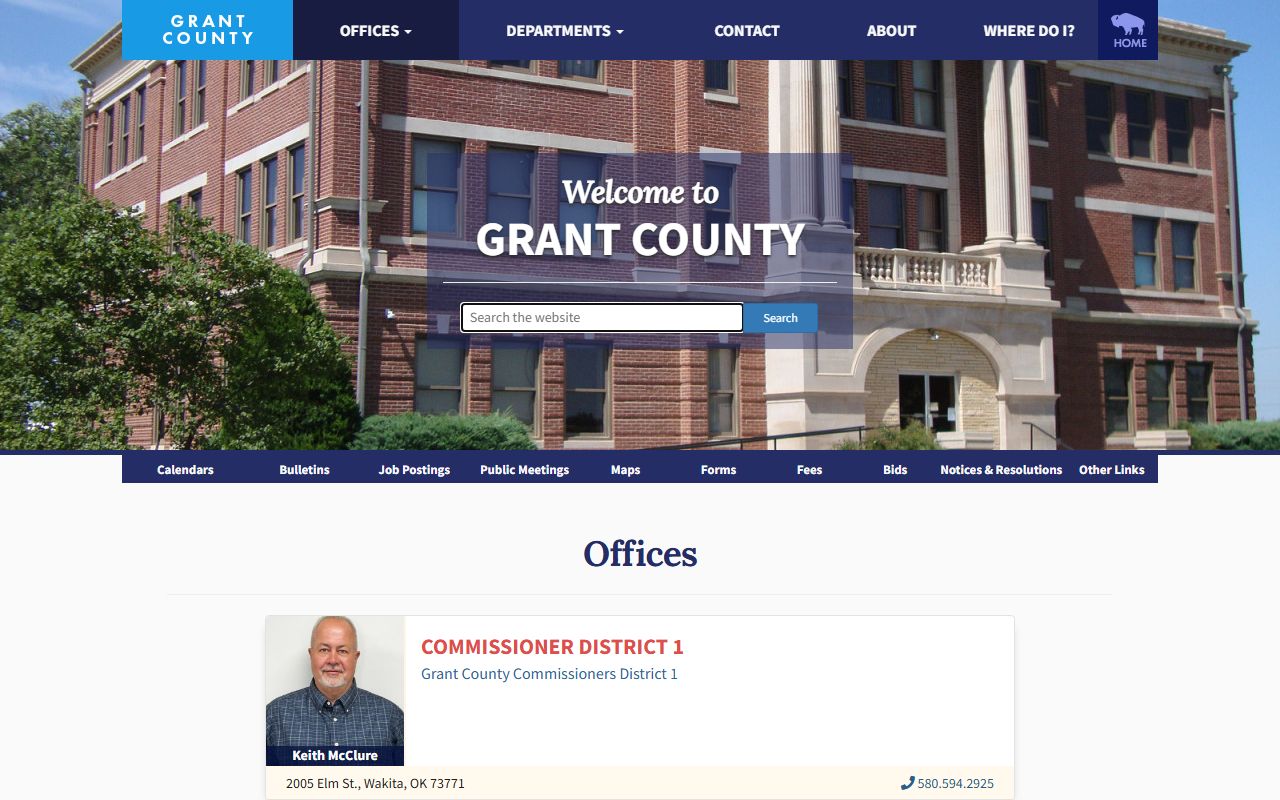
The page makes the Court Clerk and County Clerk split easy to follow before you request a record.
For step-by-step copy requests, the Grant County Court Clerk page walks through fees, hours, and certified copies, while the County Clerk page covers land and recording records.
Types of Court Records in Grant County
The District Court produces a wide range of records. Each case type carries its own code and its own access rules. Some files are fully public. Others, such as juvenile or mental health matters, stay closed by law. The list below covers the main kinds that residents look up online.
- Criminal records - felony and misdemeanor cases with charges, pleas, and sentences, detailed on the criminal court records page.
- Civil records - contract disputes, collections, judgments, liens, and name changes.
- Family and divorce records - divorce, paternity, and child support cases, with sensitive parts redacted.
- Probate records - wills, estates, guardianships, and trusts handled through the District Court.
- Traffic records - state and county citations filed in District Court, searchable by citation number.
The Court Clerk links ODCR as a free way to browse this case information. The pricing page confirms that name, case number, and filed-date searches cost nothing, while document images may require a paid plan. You can review the search interface on the ODCR court records site.
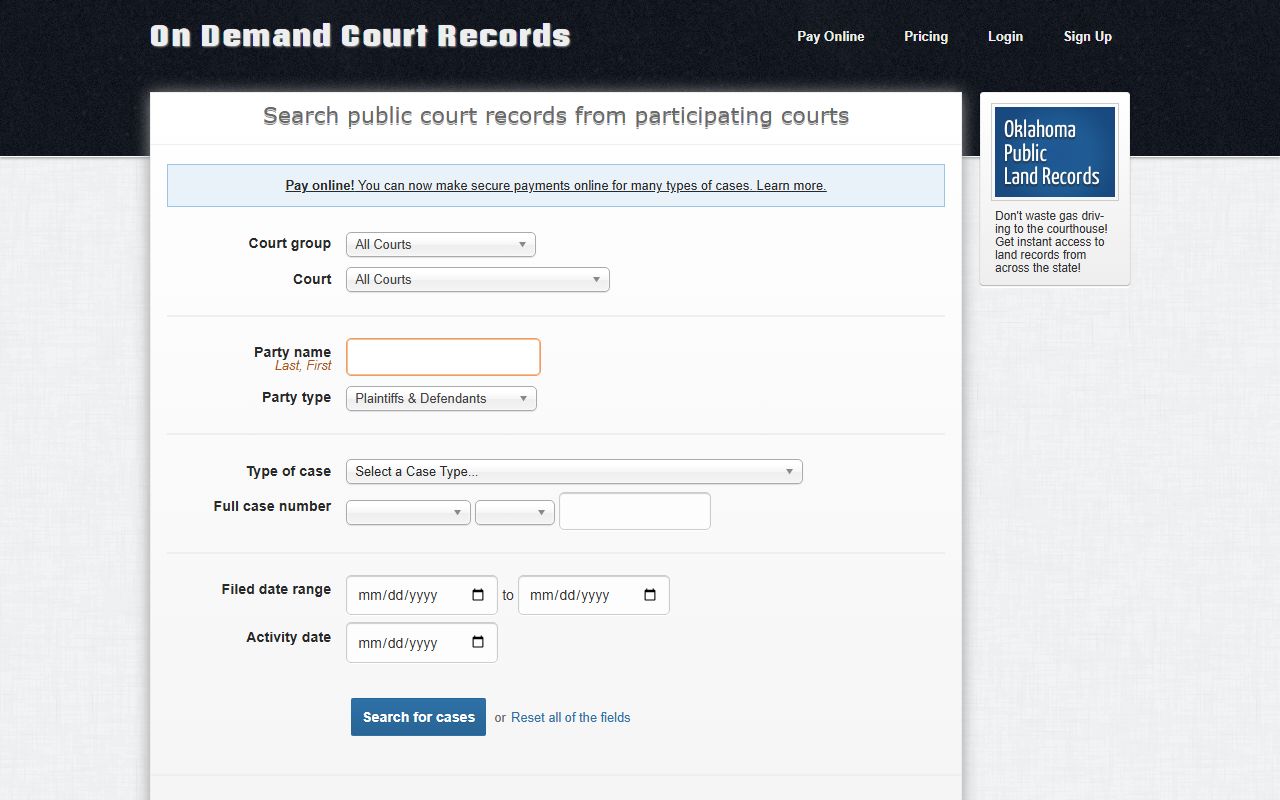
ODCR works well as a second path when an OSCN search comes up short.
What Grant County Court Records Show
A docket is a chronological log of everything filed in a case. Open one and you will see the parties, the charges or claims, the hearings, and the outcome. Financial lines often run long, since Oklahoma cases track court costs, fees, and payment plans entry by entry. The table below maps the common fields you will meet.
| Field | What It Shows |
|---|---|
| Case Number | Case type, year, and number, such as CF-2025-12 for a felony |
| Filing Date | When the case opened, plus the closed date if entered |
| Parties | Plaintiff or state versus defendant, plus attorneys and the judge |
| Charges / Cause | The offense or civil claim, with amendments noted |
| Disposition | The outcome of each charge or the case as a whole |
| Sentence / Judgment | Fines, costs, jail or prison terms, or money awards |
Docket entries name the events behind those fields. Common lines include the information, the bond, the application for appointed counsel, court minutes, the plea, and the judgment and sentence. Minor victims are often listed in a general way rather than by name, which reflects standard redaction practice on public dockets.
Public Access to Grant County Records
Oklahoma treats court records as open by default. The Court Clerk page says it best for Grant County: files reach back to the early 1900s, and all court records are public except juvenile, mental health, and adoption matters. State statutes set the wider frame, and a few are worth knowing by number.
Key Statutes:
51 O.S. § 24A.5 - Public-body records are open for inspection and copying during business hours unless a law makes them confidential.
22 O.S. § 18 - Lists who may seek expungement of a criminal record under Oklahoma law.
10A O.S. § 2-6-102 - Makes juvenile records confidential except where a statutory exception allows release.
43 O.S. § 5 - Marriage license applications are made to the District Court Clerk.
For county records that sit outside court case files, the County Clerk uses an open-records request form. The full list of Open Records Act sections is published by the state, and you can read it on the Oklahoma Open Records Act page.
Restricted and Confidential Court Records
Some records stay closed even in an open-records state. The Grant County Court Clerk names three categories that are off limits for public inspection. Other limits come from statute or from a sealing order. The list below shows the main restricted types.
- Juvenile records - confidential under 10A O.S. 2-6-102, with narrow exceptions.
- Mental health records - excluded from public inspection by the Court Clerk.
- Adoption records - sealed and not treated as normal case files.
- Sealed or expunged criminal records - removed from public view after a court order.
- Personal identifiers - Social Security numbers, account details, and protected addresses are redacted.
Expungement runs through a court petition. The Oklahoma State Bureau of Investigation explains that a Section 18 expungement can seal an entire arrest record, while Section 991(c) updates a deferred-sentence court record without removing the arrest record. Expunging a court record is free, but an arrest-record expungement carries a state processing fee. Details appear on the OSBI expungement page.
Note: Sealed and juvenile matters often require a court order or proof of eligibility, so confirm your status with the Court Clerk or an attorney before filing.
Grant County Sheriff and Jail
Sheriff Tim Irvin leads the Grant County Sheriff's Office at 219 N. First St. in Medford. The office serves District Court warrants, runs dispatch, and operates the county jail. The jail holds 39 beds inside a building dated to 1937, which makes it a compact rural facility rather than a large detention center.
The Sheriff's Office posts an online roster through a 365Labs community portal, and the office phone handles current custody, bond, and booking questions. People sentenced to state prison move to the Oklahoma Department of Corrections, so a name may leave the county roster after a transfer. For the full roster, booking detail, and the state-prison path, see the Grant County inmate records page, and check warrant records for how outstanding warrants are handled.
Warrants and Bench Warrants in Grant County
Grant County does not publish a standalone public warrant database. That does not mean a warrant is hidden. It means you check several channels rather than one search box. Court dockets, the Sheriff's Office, and the city court each hold part of the picture, depending on who issued the order.
- Arrest warrant - issued after probable cause that a person committed an offense.
- Bench warrant - issued by a judge, often for a missed court date or unpaid costs.
- Search warrant - authorizes a search; sealed or unserved warrants may not be public.
- Capias or cost warrant - used in some cases for failure to pay or appear.
Start with an OSCN or ODCR docket search, which may show a bench-warrant entry or a failure-to-appear note inside a case. For District Court warrants, call the Sheriff's Office, since that office serves them. For city matters, call Medford Municipal Court at City Hall, because municipal bench warrants do not appear in the District Court citation search.
Marriage, Divorce, and Probate Records
Marriage, divorce, and probate all run through the District Court, with files held by the Court Clerk. Oklahoma marriage-license applications are made in person to the Court Clerk. Divorce cases are filed as family and domestic matters, and probate covers wills, estates, and guardianships. You can search each type through OSCN or ODCR, then request certified copies from the Court Clerk. For more detail, see the marriage and divorce records page and the probate records page.
- Testator
- A person who makes a will.
- Executor
- The person named in a will to carry out the estate.
- Administrator
- A person the court appoints to handle an estate with no valid will.
- Intestate
- Dying without a valid will.
- Guardian
- A person appointed to care for a minor or an incapacitated adult.
Probate is not always a full court estate. The County Clerk offers a small estate affidavit for a deposit account under $50,000 when no estate case is open. Note: A small estate affidavit can settle a limited bank-account issue, but a contested estate still needs a District Court probate case.
Grant County Court Records Fees
Copy and certification fees vary by office. The County Clerk publishes a recording and copy fee schedule, and the county open-records policy sets separate rates for county records. Court filing fees are set by the Court Clerk and should be confirmed by phone. The table below lists the published amounts.
| Item | Amount |
|---|---|
| Certificate or certified copy | $1 per certificate |
| Plain copy | $1 per page |
| Preservation fee per recorded document | $10 |
| Documentary stamp tax | $0.75 per $500 |
| Open-records copy, county records | $0.25 per page |
| Open-records certification | $1 per page |
| Open-records labor | $20 per hour |
The county open-records policy waives small jobs and asks for a deposit when an estimate runs past $100. Recording and copy rates are listed on the Grant County fee schedule. Court filing fees differ from these county rates, so call the Court Clerk for a current quote.
Federal Courts for Grant County
Federal cases do not appear in the Grant County District Court docket. The county falls inside the U.S. District Court for the Western District of Oklahoma. That court handles federal crimes, federal civil suits, and federal-question cases from an Oklahoma City courthouse. You can reach the court site at the Western District of Oklahoma homepage.
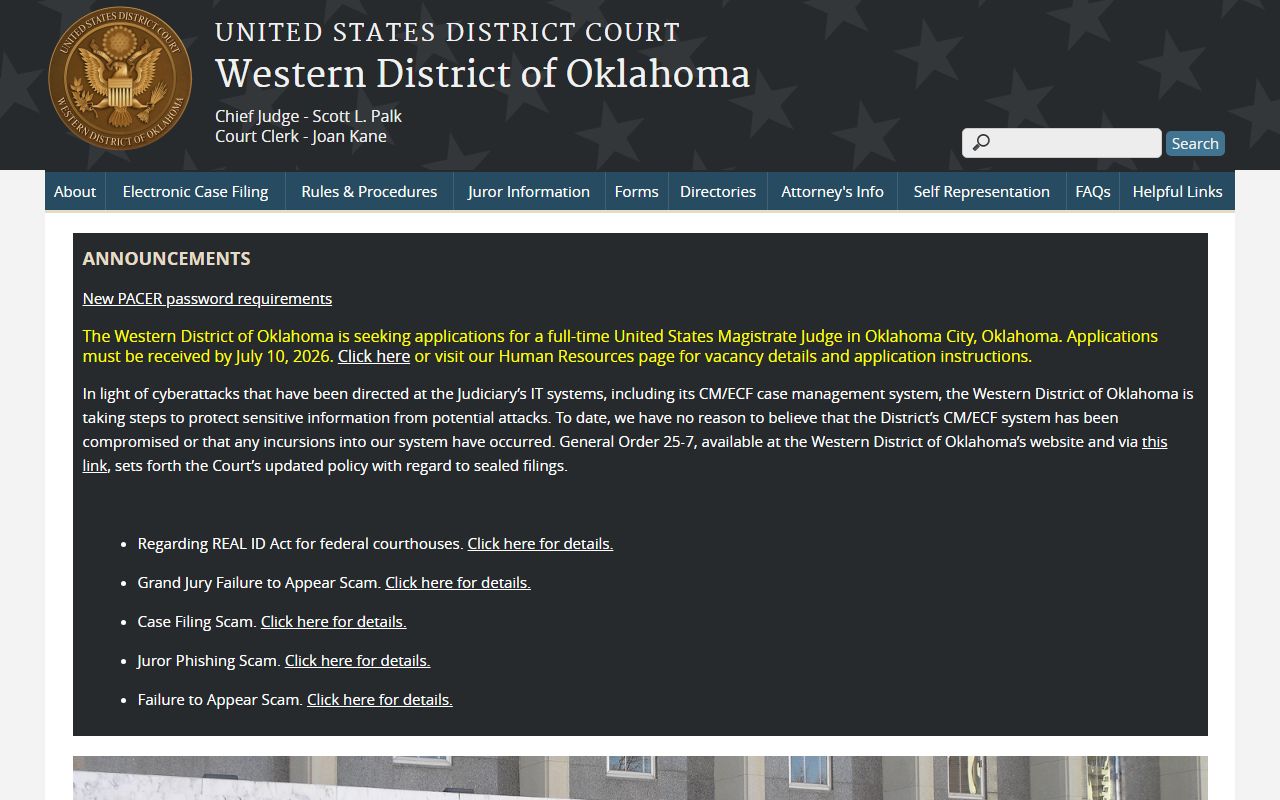
The Western District is the largest of Oklahoma's three federal districts and covers 40 of the state's 77 counties.
The court's main office sits at 200 NW 4th Street in Oklahoma City, with a main line of 405-609-5000. Contact numbers for the clerk, jury services, and the ECF help desk are listed on the Western District contact page.
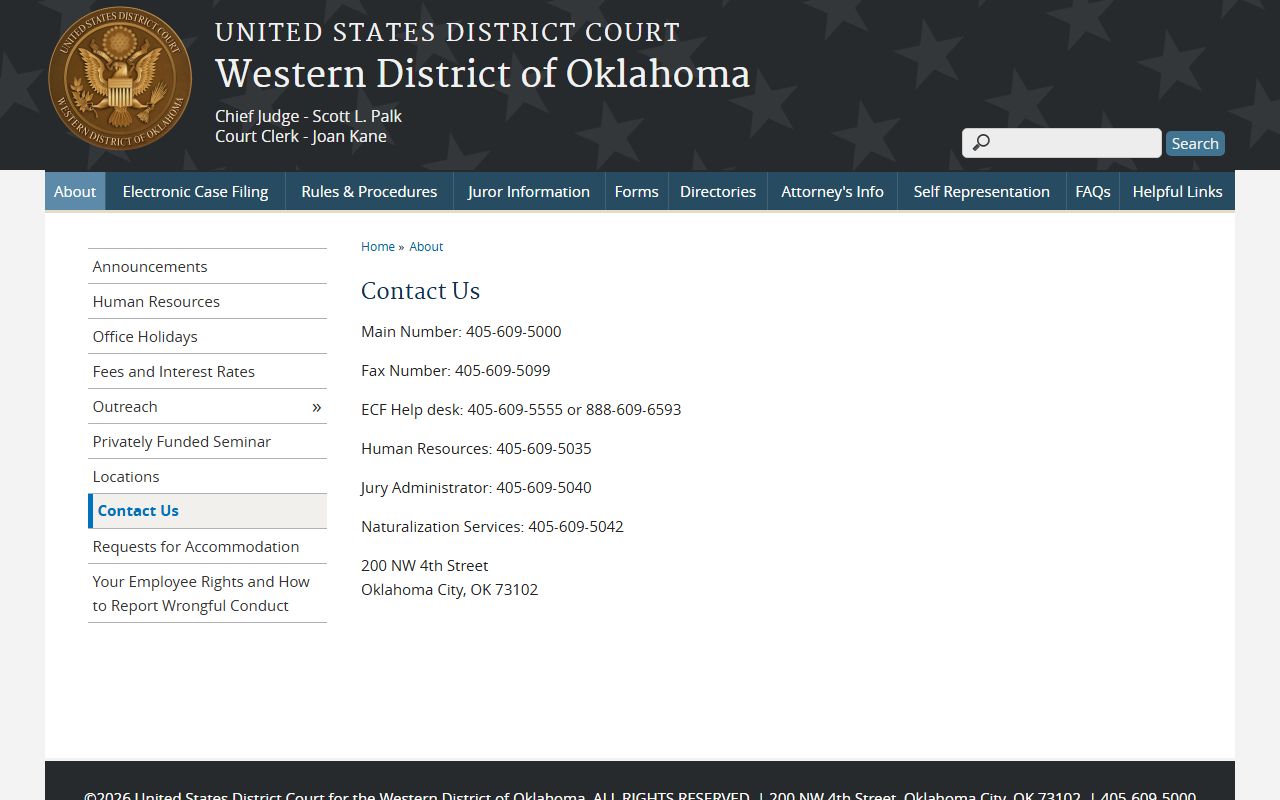
Use that Oklahoma City address as the default federal contact point for Grant County matters.
Bankruptcy is its own federal track. Grant County filings go to the U.S. Bankruptcy Court for the Western District of Oklahoma, not to the county courthouse. The court site is the Western District bankruptcy court.
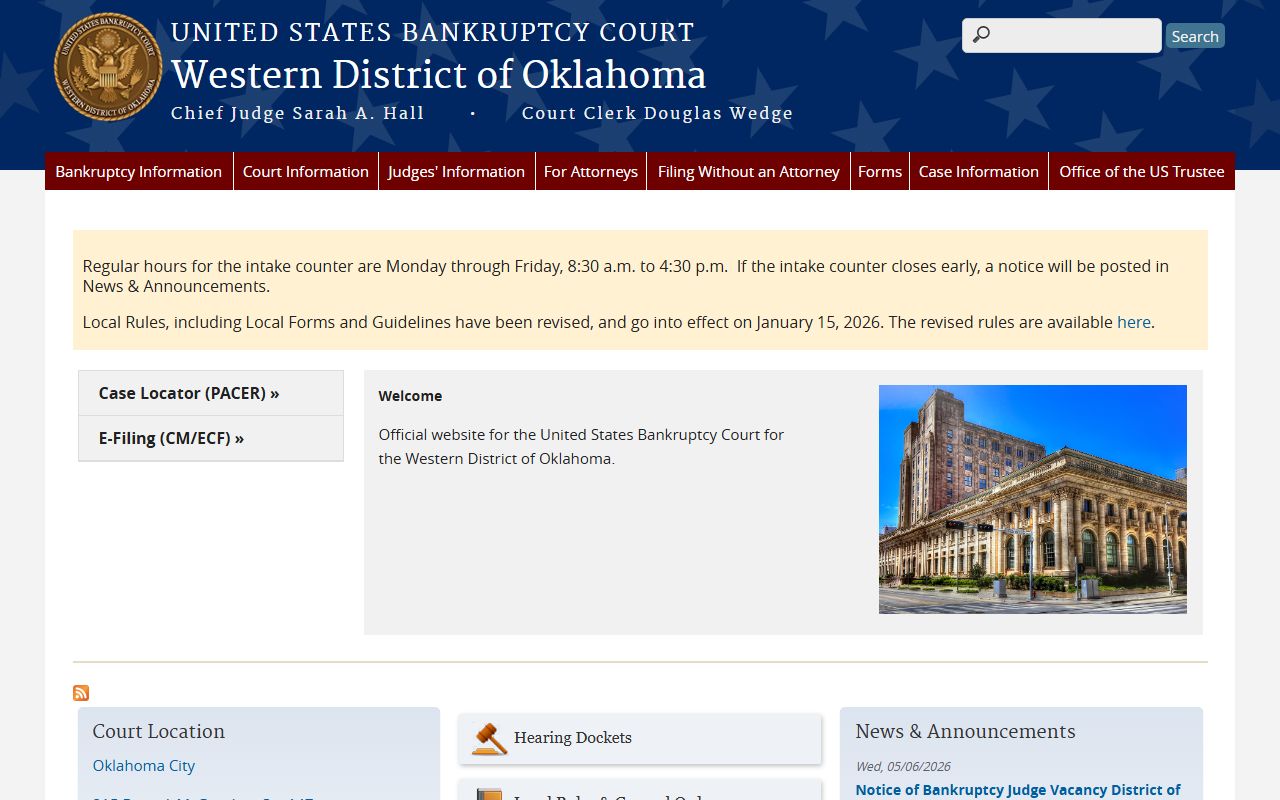
Bankruptcy records use federal systems and are kept apart from state court files.
Federal prosecutions come from the U.S. Attorney's Office for the Western District of Oklahoma. That office files federal charges and represents the United States in civil matters. Its public page is the U.S. Attorney, Western District site.
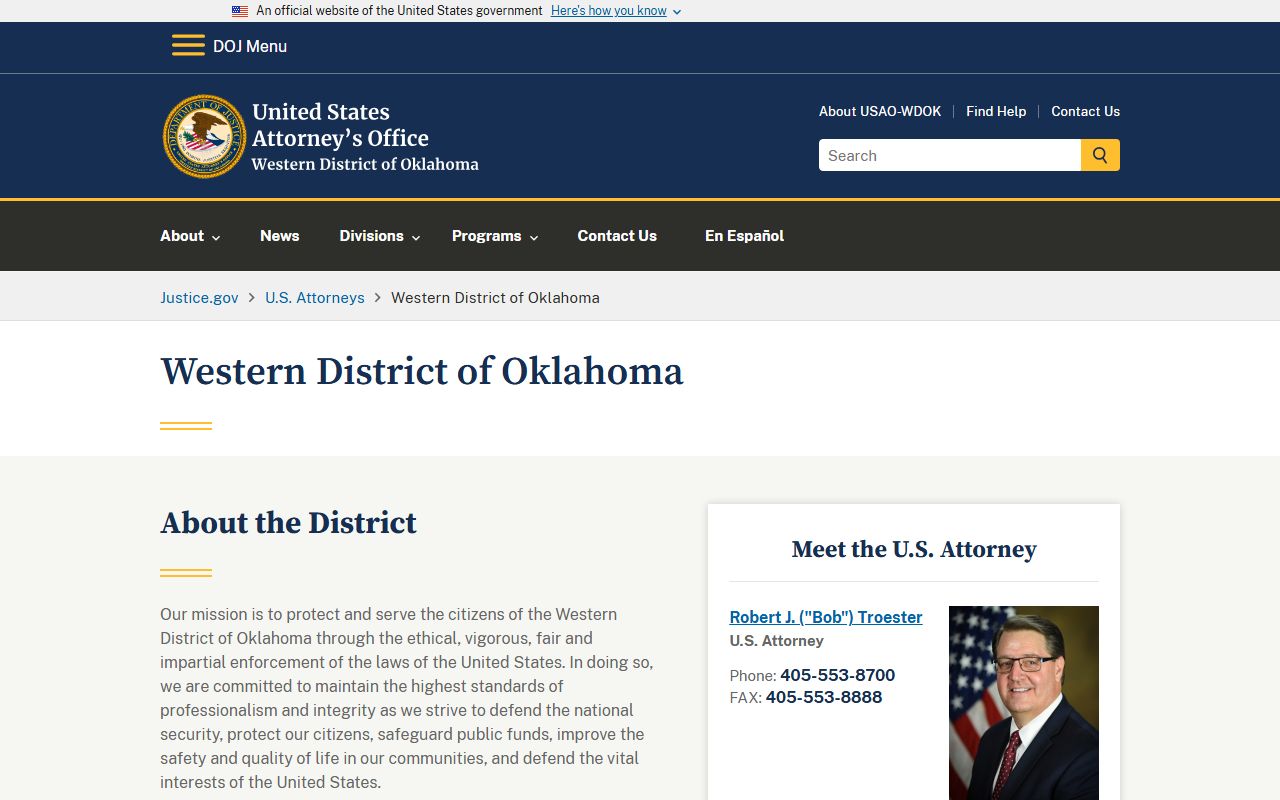
This explains why a federal drug, fraud, or firearm case will not show up in a Grant County District Court search.
Federal case documents live in PACER, the federal judiciary's case-access system. Most documents require a PACER account, and standard fees may apply. The court lookup for this district is on the PACER court lookup page.
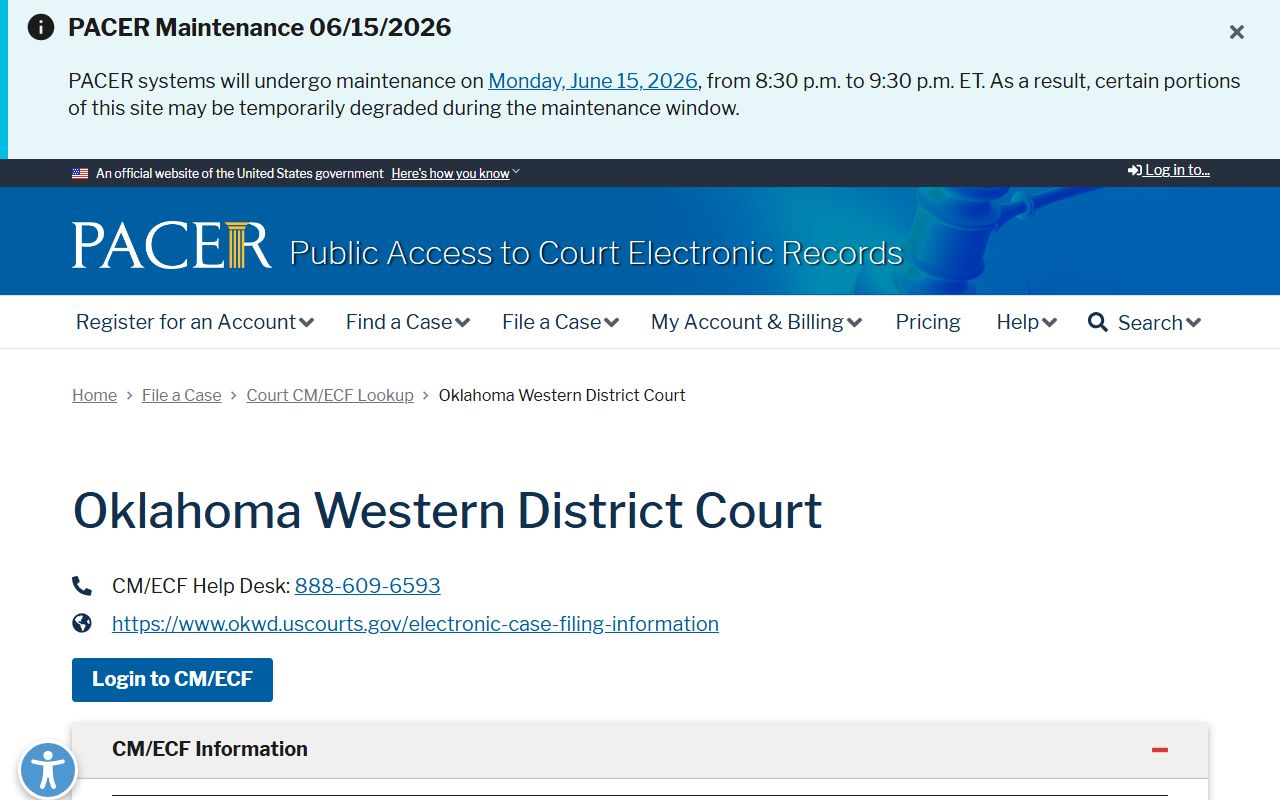
PACER is the official source for federal dockets tied to the Western District.
The district boundary itself comes from federal law. 28 U.S.C. 116 sets the Oklahoma judicial districts and places Grant County in the Western District. The statute text is on the 28 U.S.C. 116 page.
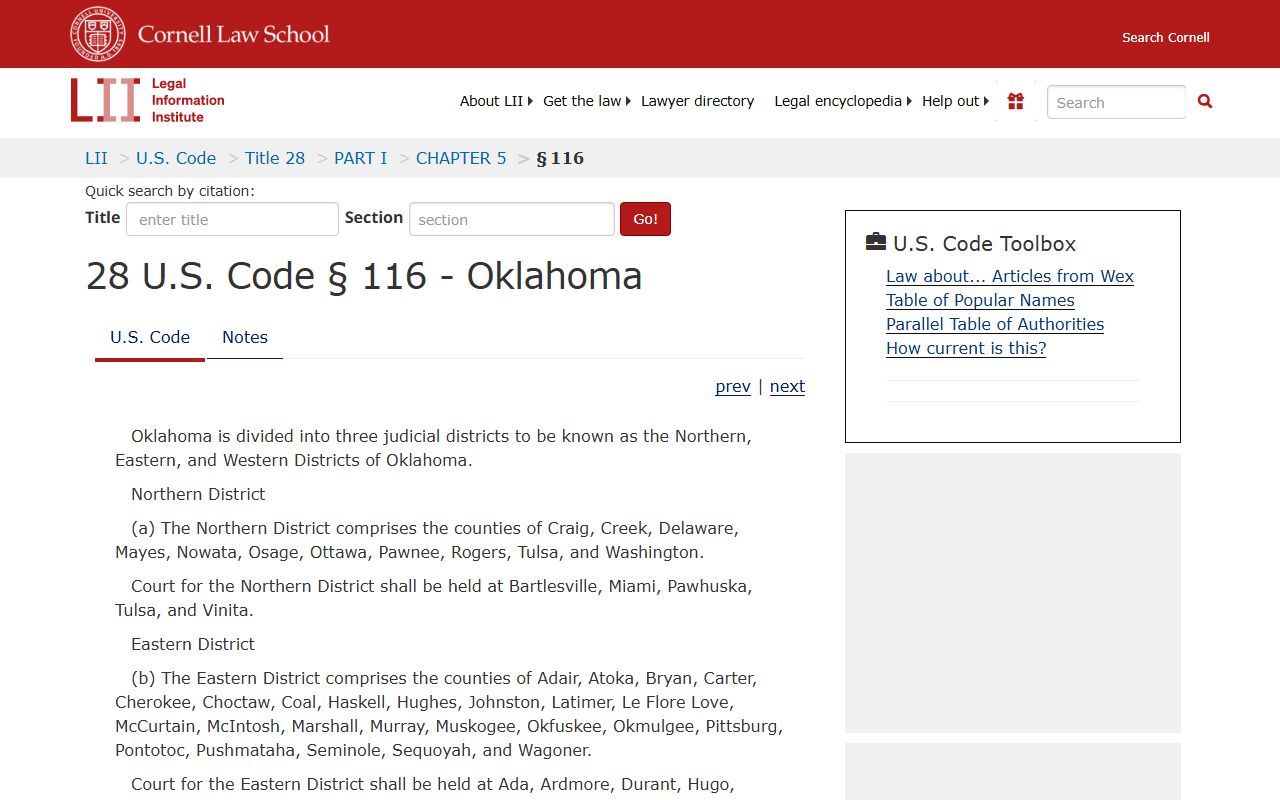
That citation is the legal reason Grant County federal matters route to Oklahoma City.
History of Grant County Courts
Grant County began as part of the Cherokee Outlet, which opened to settlement on September 16, 1893. The area was first called County L in Oklahoma Territory, with Pond Creek as the county seat. A vote on November 6, 1894 renamed the county for President Ulysses S. Grant. Medford won the county seat by election on May 27, 1908.
Officials met in temporary quarters until the courthouse was built. The Grant County Courthouse went up in 1909 and was dedicated on July 4, 1910. The Oklahoma Historical Society records this shift from elected seat to permanent home of county government. You can read the county entry on the Oklahoma Historical Society site.
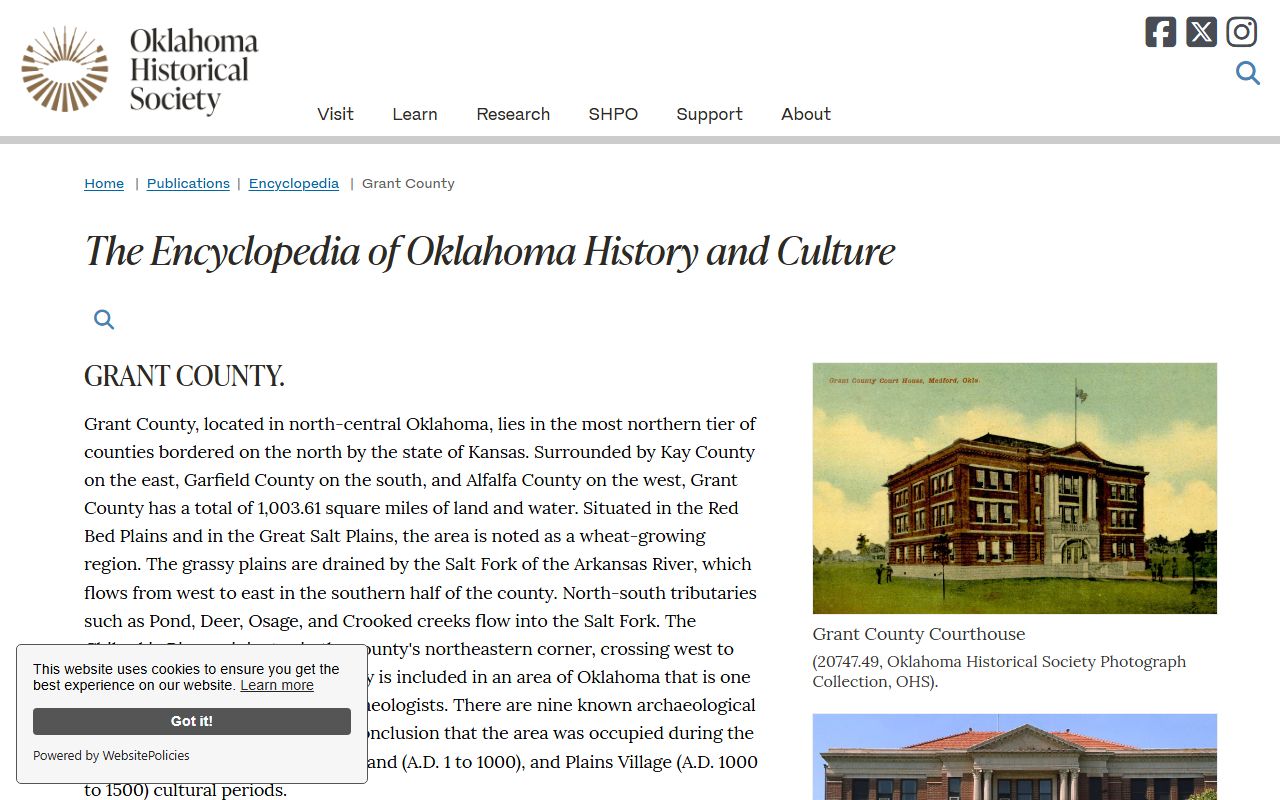
That entry ties the courthouse to the wider story of Medford and the Cherokee Outlet.
The county still serves a small population, which shapes how its courts work. Many records are held on paper at the counter rather than fully online, so a phone call often beats a web search. The county overview, with its naming and settlement history, sits on the Grant County about page.
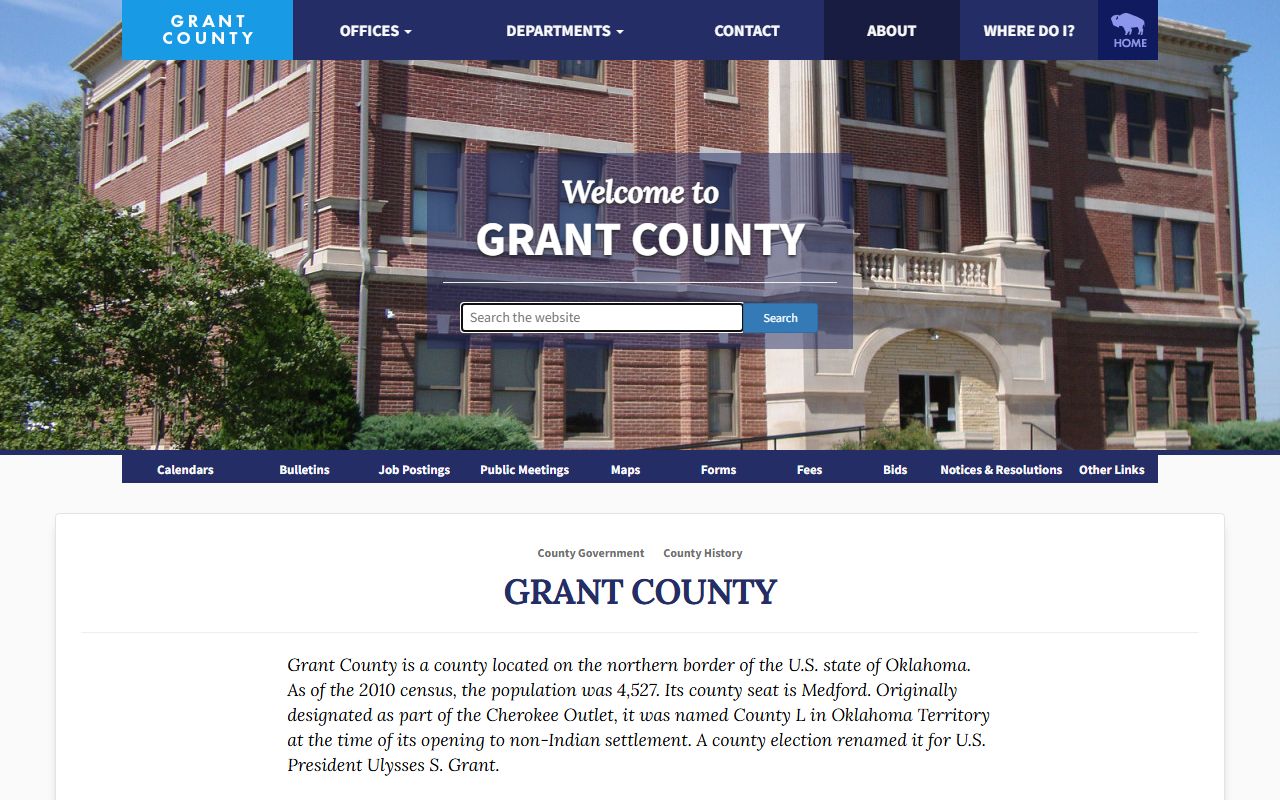
Population figures back this up, and the count sits on the U.S. Census QuickFacts page for Grant County.
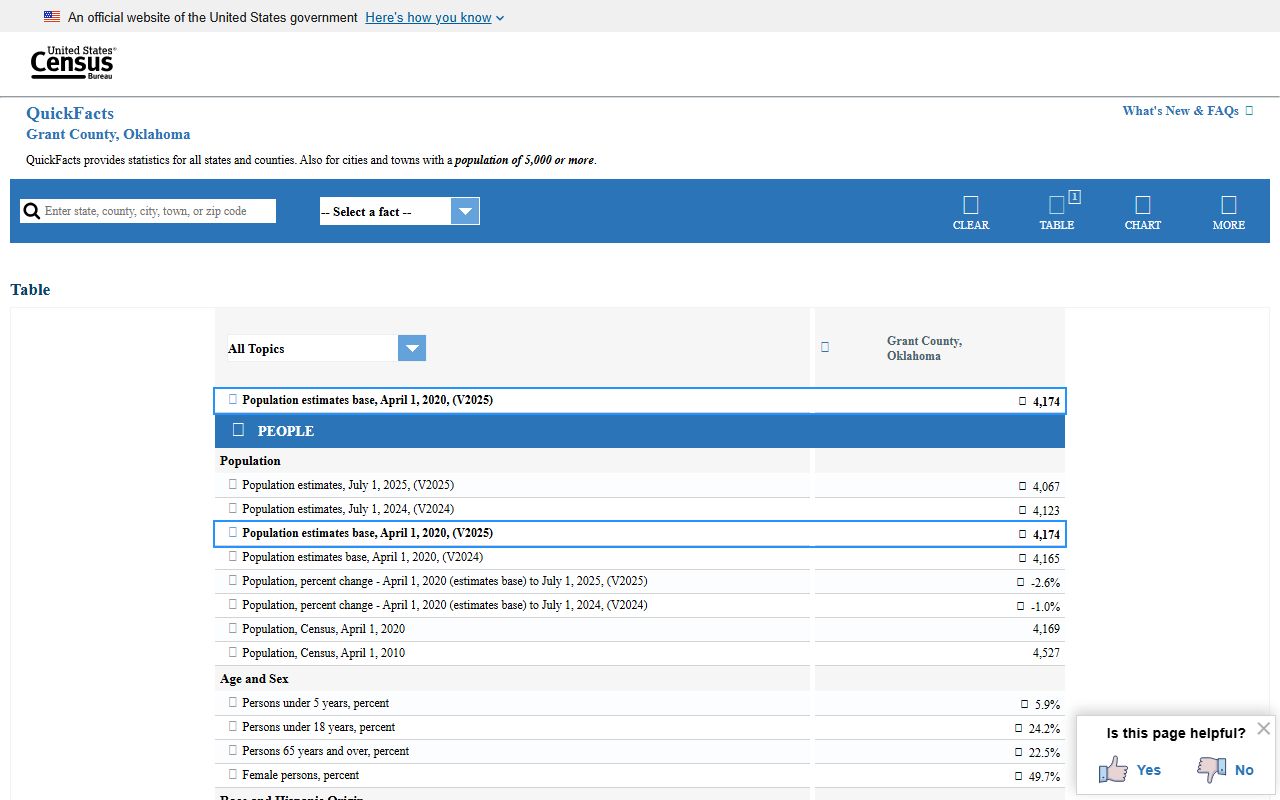
The 2020 Census counted 4,169 residents, a figure that explains the close, in-person feel of local court business.
Reading Grant County Court Records
Court dockets use shorthand that can puzzle a first-time reader. Case numbers start with a type code, such as CF for felony, CM for misdemeanor, CJ for civil, FD for family, PB for probate, and TR for traffic. The terms below clear up the words that matter most when you read a result.
- Disposition
- The outcome of a charge or the whole case.
- Plea
- The defendant's answer to a criminal charge.
- Conviction
- A finding or plea of guilt.
- Deferred sentence
- A sentence delayed under conditions, which may later support expungement.
- Bench warrant
- A warrant a judge issues, often for a missed court date.
A charge is not a conviction. A filed charge only means the prosecutor brought an allegation. The disposition line tells you what actually happened, so read it before you draw any conclusion about a case.
Frequently Asked Questions
How do I look up a Grant County court case online?
Use the OSCN Docket Search and set the court to Grant County District Court. Search by case number when you have one, or by last name when you do not. Run the same name through ODCR as a second check, since the two systems do not always match. Both let you read dockets for free.
Are Grant County court records public?
Yes, most are. The Court Clerk says all court records are open for public inspection except juvenile, mental health, and adoption matters. Files reach back to the early 1900s. Sealed and expunged records are closed by court order, and personal identifiers like Social Security numbers are redacted from public copies.
Where do I get a certified copy?
Request certified copies from the Grant County Court Clerk in Room 202 of the courthouse. The office takes requests by phone, mail, email, or in person. Certificates run $1 each and plain copies run $1 per page. Call ahead to confirm payment type and to check whether your record is held on paper.
How do I check for a warrant in Grant County?
There is no single public warrant database. Search OSCN or ODCR for a bench-warrant entry inside a case. For District Court warrants, call the Sheriff's Office, which serves them. For city matters, call Medford Municipal Court at City Hall, because municipal warrants do not show in the District Court citation search.
What is the difference between the Court Clerk and the County Clerk?
The Court Clerk keeps court case files, including criminal, civil, family, probate, marriage, and traffic records. The County Clerk keeps land and county records, such as deeds, mortgages, liens, plats, and oil and gas leases. The County Clerk also processes open-records requests for county documents.
Do municipal tickets appear in the state docket search?
No. The OSCN citation search covers District Court traffic only and does not search municipal citations. A Medford city ticket stays with the municipal court. Call City Hall at 580-395-2823 for a case, a court date, or a fine on a city citation.
Where do federal cases go?
Grant County sits in the U.S. District Court for the Western District of Oklahoma, based in Oklahoma City. Federal crimes, federal civil suits, and bankruptcy filings use federal systems and PACER, not the county courthouse. They will not appear in an OSCN or ODCR search of Grant County District Court.